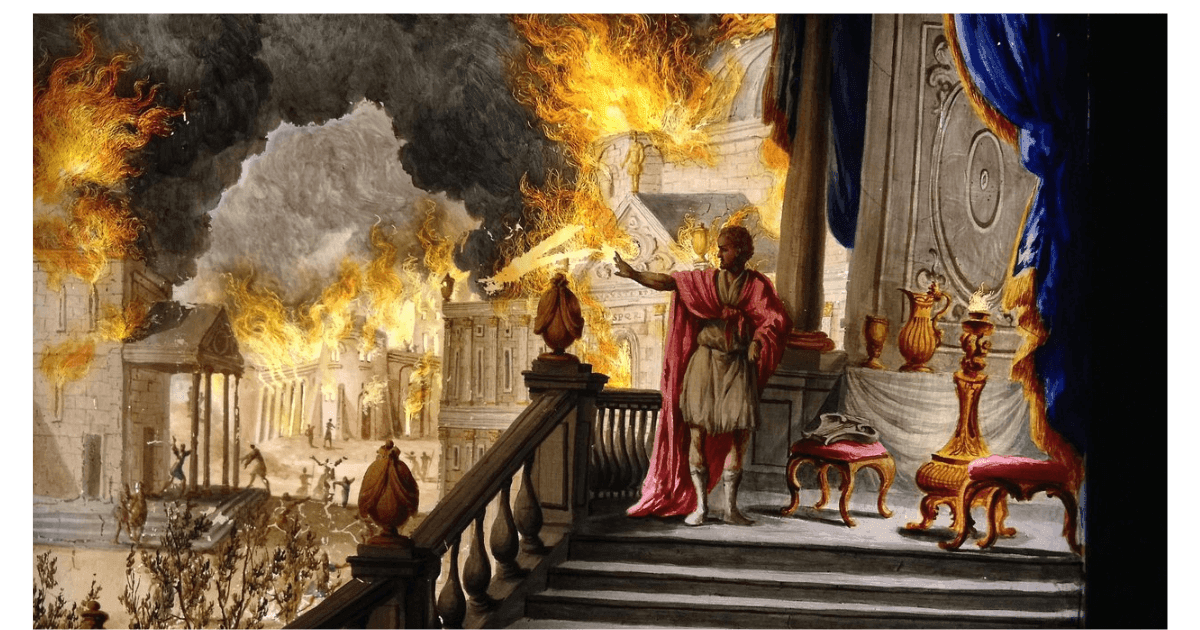
Cover painting: “The Emperor Nero contemplating the fire of Rome on July 18, 64”, unknown artist, engraving, 19th century.
Nero, the fifth emperor of Rome, remains one of the most controversial figures in Roman history. His name is associated with tyranny, murder, extravagance, and the Great Fire of Rome in AD 64. Popular culture has preserved the image of a deranged ruler who watched his capital burn while playing music. Yet the historical evidence presents a more complicated picture. Although Nero’s reign included serious political violence and the execution of opponents, the surviving accounts were written by authors whose perspectives and political circumstances must be taken into consideration.
The Making of an Emperor
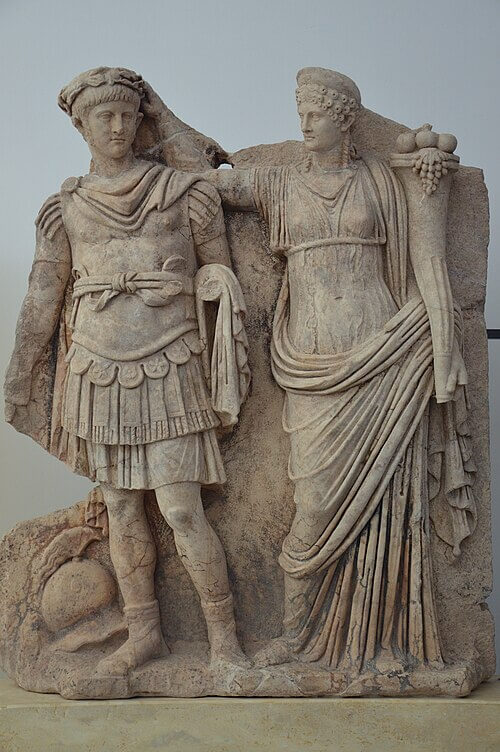
Nero was born Lucius Domitius Ahenobarbus on 15 December AD 37. His mother, Agrippina the Younger, was the sister of Emperor Caligula and later married Emperor Claudius. In AD 50, Claudius adopted Nero, placing him in the imperial succession. When Claudius died in AD 54, Nero became emperor at approximately sixteen years of age.
His early reign initially appeared promising. The young emperor was guided by influential advisers, particularly the philosopher Seneca and the praetorian prefect Sextus Afranius Burrus. Ancient accounts suggest that the first years of his rule were comparatively stable, although the extent of his personal independence remains debated. Nero’s relationship with his mother also deteriorated as he sought greater control over imperial affairs.
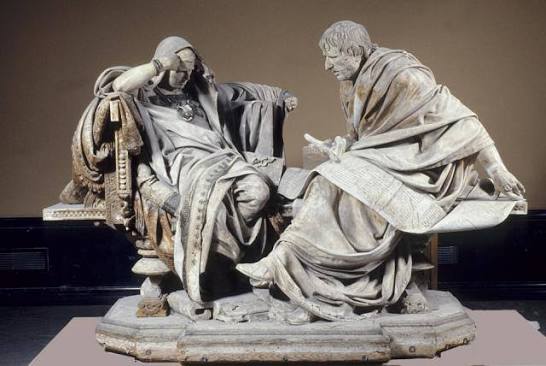
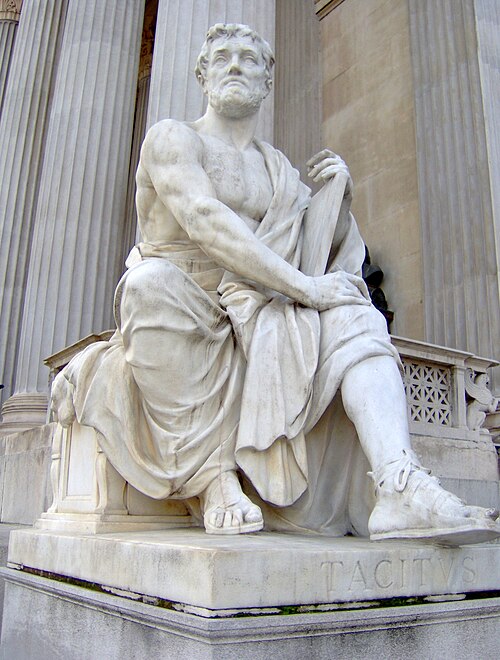
In AD 59, Agrippina was murdered. Tacitus and Suetonius describe Nero’s involvement in the plot, although their accounts differ in detail. The killing became one of the defining episodes of his reign, reinforcing the perception that the emperor was willing to eliminate even members of his own family to secure his position. Nevertheless, the surviving narratives must be read critically, since the authors wrote with knowledge of Nero’s eventual downfall.
Then, political violence started. Nero’s reign became increasingly associated with conflict at the imperial court. In AD 62, his first wife, Claudia Octavia, was divorced and subsequently executed after accusations of adultery. These accusations have often been regarded with suspicion by historians, particularly because Octavia was popular with the Roman public and her removal benefited Nero’s relationship with Poppaea Sabina.
The emperor’s treatment of prominent Romans also contributed to his hostile reputation. In AD 65, the Pisonian conspiracy, a plot to assassinate Nero, was uncovered. Its aftermath led to executions and forced suicides among members of the Roman elite. Seneca, who had gradually withdrawn from political life, was ordered to die after being implicated in the conspiracy.
These events provide substantial grounds for viewing Nero’s government as increasingly repressive. However, the precise motives behind individual executions cannot always be established with certainty. Ancient historians frequently presented imperial decisions through narratives of personal cruelty, ambition, and moral decline. Such explanations may preserve genuine events while simplifying the political circumstances in which they occurred.
The Great Fire of Rome
On 19 July AD 64, a devastating fire broke out in Rome near the Circus Maximus. According to Tacitus, the Great Fire of Rome spread rapidly through the city’s densely built streets. It was brought under control on the sixth day, after extensive demolitions helped halt its advance, but subsequently broke out again. Tacitus reports that, of Rome’s fourteen districts, four remained intact, three were completely destroyed, and the remaining seven suffered extensive damage.
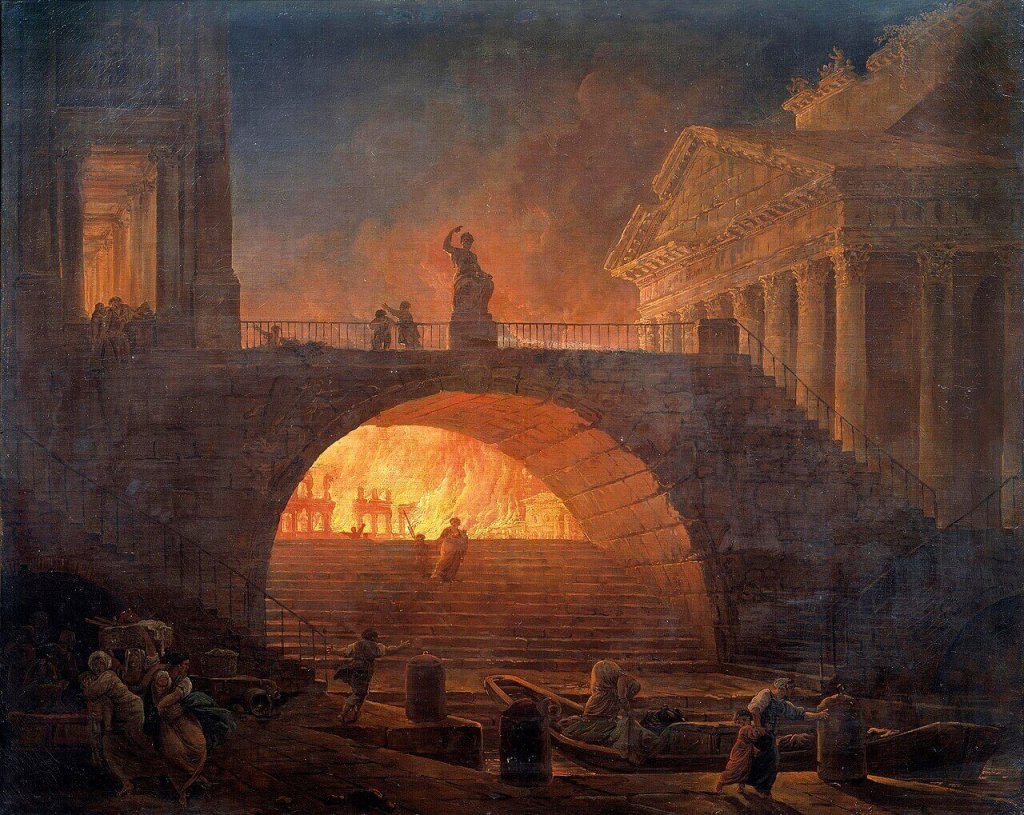
The disaster created an enormous humanitarian and political crisis. Tacitus reports that Nero returned to Rome from Antium and organized relief measures, including opening buildings and providing assistance to displaced inhabitants. The emperor also undertook a major reconstruction programme, introducing measures intended to regulate aspects of building construction.
Nevertheless, suspicion soon surrounded Nero. His subsequent construction of the Domus Aurea, an enormous palace complex occupying land affected by the fire, helped fuel accusations that he had deliberately destroyed parts of the city to create space for his private residence.
But suspicion is not proof. Tacitus explicitly states that the fire’s origin was uncertain, noting that accounts differed over whether it had occurred accidentally or through deliberate action. The claim that Nero personally ordered the fire therefore cannot be treated as an established historical fact.
The familiar story that Nero sang while Rome burned is disputed. Tacitus reports a rumour that Nero sang about the destruction of Troy during the fire, while Suetonius and Cassius Dio provide more elaborate versions of the episode. Tacitus also records that Nero was at Antium when the fire began and returned to Rome as it approached his residence. Since the accounts differ and the alleged performance is not independently verified, the image of Nero singing as Rome burned should be treated as an ancient tradition rather than an established fact.
Nero and the Christians
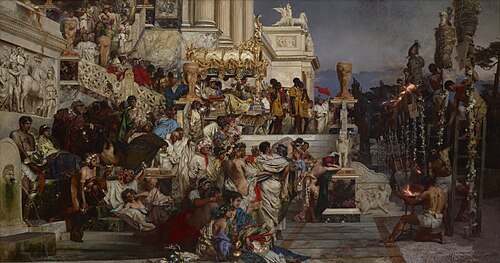
The Great Fire also provides the setting for one of the most significant episodes in early Christian history. Tacitus states that Nero attempted to suppress rumours implicating him in the disaster by punishing Christians, a group already viewed with hostility by sections of Roman society.
According to Annals 15.44, those arrested were subjected to severe punishments. Tacitus describes executions involving animals and burning, presenting the spectacle as an example of Nero’s cruelty. His account is important because it is the principal surviving non-Christian narrative explicitly connecting Nero, the fire, and the punishment of Christians.
However, historians continue to debate aspects of this episode, including its precise scale and the reliability of the surviving testimony. The existence and extent of a distinct, centrally organized persecution under Nero have been challenged in modern scholarship, although other scholars defend Tacitus’s account. It is therefore important to distinguish what the ancient source reports from what can be independently established.
Nero’s political position deteriorated sharply in AD 68, when revolts broke out against his government. The rebellion of Gaius Julius Vindex in Gaul helped trigger a wider crisis, and Galba, governor of Hispania Tarraconensis, emerged as a rival claimant to power. As support for Nero collapsed, the Senate declared him a public enemy.
Abandoned by much of his political and military support, Nero fled Rome. On 9 June AD 68, he died by suicide with assistance from his freedman Epaphroditus, according to Suetonius. He was thirty years old. His death ended the Julio-Claudian dynasty and was followed by a struggle for imperial power known as the Year of the Four Emperors.
Nero’s reputation did not die with him. Later writers portrayed him as a symbol of imperial excess and moral corruption. Yet modern historians must balance these narratives against the political context in which they were written, as well as the surviving archaeological and material evidence. The Flavian dynasty, which succeeded Nero, had strong reasons to distance itself from the previous regime.
Nero was neither simply an innocent victim of propaganda nor a figure whose every infamous deed can be accepted without scrutiny. His reign included documented violence, political executions, and a catastrophic urban disaster. At the same time, the most dramatic stories about him reveal how historical memory can be shaped by hostile testimony, political interests, and centuries of repetition.
The enduring question is therefore not merely whether Nero was a bad emperor. But how much of the Nero we remember belongs to the historical individual—and how much belongs to the powerful tradition that emerged after his death.
Sources
Tacitus, The Annals, transl. by Alfred John Church and William Jackson Brodribb.
Suetonius, Life of Nero, Perseus Digital Library.
Cassius Dio, Roman History, book 62.
The Emperor Nero: A Guide to the Ancient Sources, Princeton University Press
Brent D. Shaw, “The Myth of the Neronian Persecution,” Journal of Roman Studies 105 (2015), 73–100.