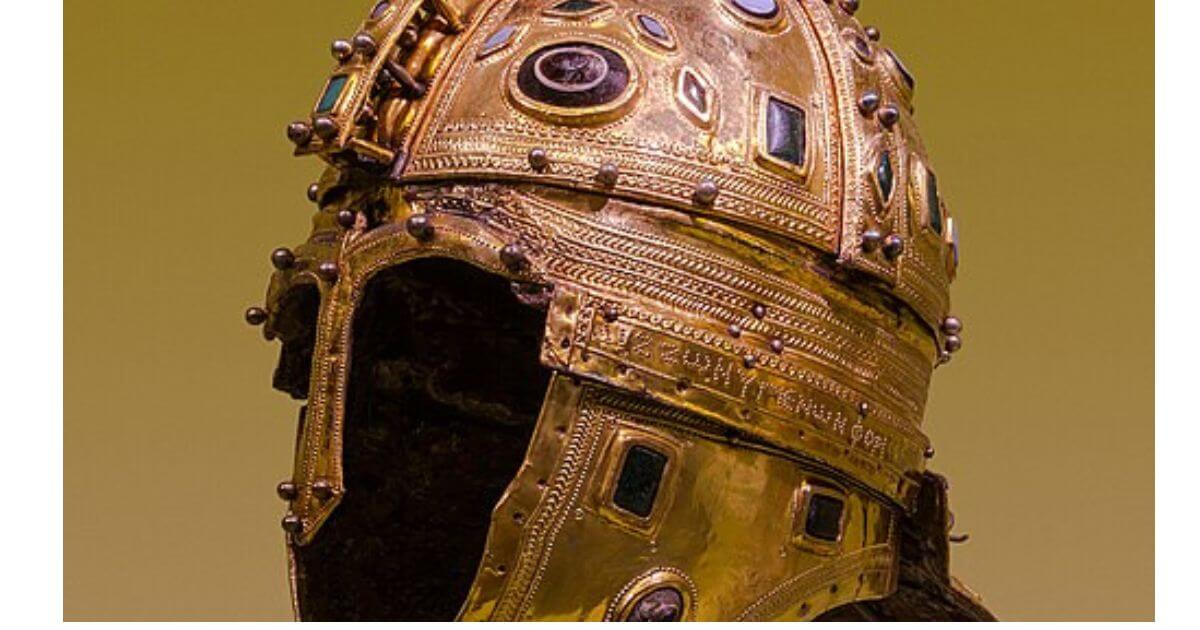
By the middle of the fifth century AD, the Western Roman Empire was no longer the dominant military power that had once controlled the entire Mediterranean world, yet it was far from being a mere shadow of its former self. The state still possessed administrative structures, wealthy cities, experienced commanders and soldiers capable of defeating major enemies. What had changed was the nature of Roman power. The emperor no longer commanded an unquestioned imperial machine; instead, authority depended increasingly on powerful generals, regional armies and alliances with peoples once considered Rome’s enemies. In this unstable world emerged Julius Valerius Majorianus, a soldier-emperor whose brief reign represented one of the final serious attempts to restore the Western Empire through military strength and political reform.

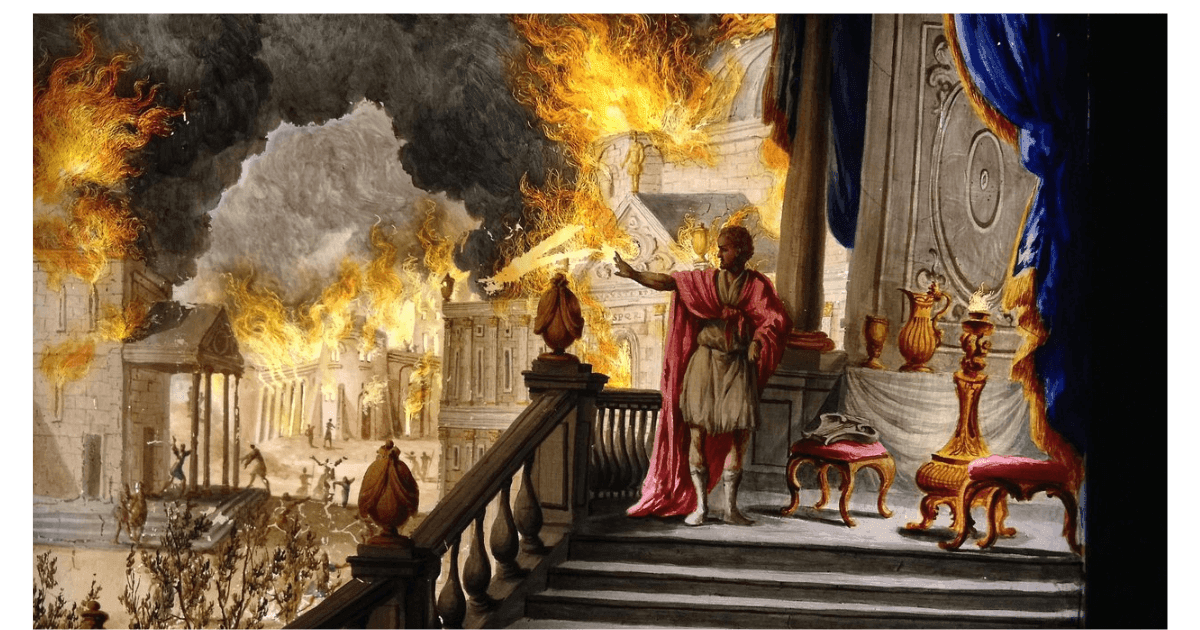
The crisis that brought Majorian to power began with the assassination of Emperor Valentinian III in 455 AD. The following months saw political chaos, while the Vandal king Geiseric exploited Roman weakness by invading Italy and sacking Rome. The event was devastating not only symbolically but strategically. The Vandals already controlled North Africa, the richest remaining province of the Western Empire, providing enormous agricultural production, tax revenue and naval bases. Without Africa, the Western imperial government lost the economic foundation that had supported its armies for generations.
During this period, the real power behind the throne increasingly belonged to military commanders. Among them was Ricimer, a talented general of Germanic ancestry who possessed enormous influence over the western army. Majorian, himself an experienced officer, initially rose alongside Ricimer. In 456 AD, the two men contributed to the defeat of Emperor Avitus near Placentia, and in 457 AD Majorian was elevated to the imperial throne with the support of the army and recognition from the Eastern Emperor Leo I.
Unlike several of his predecessors, Majorian was not content to be a ceremonial ruler. He was a soldier who understood that the survival of the Western Empire depended upon military recovery. His first objective was to restore imperial authority in Italy and rebuild confidence in the Roman army. Shortly after his accession, he faced an invasion by the Alamanni, who had crossed into northern Italy from the Alpine regions. Majorian personally led Roman forces against them and successfully repelled the invaders, demonstrating that the new emperor was capable of defending imperial territory. The ancient sources do not preserve the exact size of either army or the number of casualties, but the political effect of the victory was significant: Majorian had proven that he was a commander, not merely a figure placed on the throne by powerful generals.

The army Majorian commanded was very different from the legions of the early empire. The fifth-century Roman military was built around mobile field armies known as the comitatenses, supported by elite formations called palatini and auxilia palatina. These troops formed the core of imperial expeditionary warfare. Cavalry had become increasingly important, including heavily armoured cavalry units and mounted archers. Alongside these regular Roman formations served large numbers of foederati, allied troops recruited from peoples such as Goths, Burgundians, Huns, Alans and other groups who fought under Roman command. By Majorian’s time, the distinction between “Roman” and “barbarian” soldiers had become far less clear than in earlier centuries. The key issue was not ethnicity but loyalty, discipline and command structure.
In 458 AD, Majorian began the first major phase of his restoration program. He strengthened the army, reorganized military operations and prepared a campaign to recover imperial authority in Gaul. Before moving into the region, however, he had to respond to a Vandal raid against Italy. A Vandal force landed in Campania, attempting to exploit Roman weakness, but Majorian reacted quickly and defeated the raiders. The sources again do not provide reliable troop numbers or casualty figures, but the engagement demonstrated that Vandal naval power could still be challenged and that the emperor was willing to confront enemies personally.
The Gallic campaign became the greatest military achievement of Majorian’s reign. Southern Gaul had become dominated by the Visigoths under King Theoderic II, while the Burgundians expanded their influence along the Rhône valley. Majorian entered Gaul with a large field army supported by experienced commanders, including Aegidius and Nepotianus. Near Arelate (modern Arles), Roman forces confronted the Visigoths and gained the upper hand. Theoderic II was subsequently forced to accept a treaty with Rome, transforming a dangerous enemy into a Roman ally through the traditional system of foederati. Majorian did not attempt to destroy the Visigothic kingdom; instead, he used military pressure and diplomacy to restore Roman influence.
The exact size of the armies at Arelate is unknown. Although later writers and modern popular accounts sometimes provide precise figures, the surviving fifth-century sources do not record reliable numbers. What is certain is the strategic result: for the first time in decades, a Western emperor had forced one of the great barbarian kingdoms of Gaul to recognize Roman authority.

Following the Visigothic defeat, Majorian turned against the Burgundians. The city of Lugdunum (modern Lyon), a major political and economic centre, had fallen under Burgundian control. Roman forces recovered the region and restored imperial influence along the Rhône corridor. This victory secured communication routes between Italy and Gaul and demonstrated that the Western government could still project military power beyond the Italian peninsula.
By 459 AD, Majorian’s attention moved toward Hispania. His campaign there was not merely an attempt to recover lost territory; it was preparation for a much greater operation. His ultimate objective was the destruction of the Vandal kingdom in North Africa. Geiseric’s control of Carthage and the African provinces represented the greatest obstacle to Roman recovery. If Majorian could reconquer Africa, he would regain the empire’s richest tax base, restore grain supplies and rebuild the financial resources needed for future campaigns.
To achieve this goal, Majorian created one of the most ambitious military projects of the late Western Empire. A large fleet was constructed, with ancient sources and later accounts associating the preparation with approximately 300 ships. For a state that had lost much of its naval dominance, this represented an extraordinary effort. The expeditionary force assembled for the African invasion would have consisted of Roman field troops (comitatenses), elite units (palatini), cavalry formations and allied foederati. The exact number of soldiers remains unknown, as do the precise proportions of Roman and allied troops.
The campaign collapsed before it reached Africa. Geiseric learned of Majorian’s plans and chose not to wait for the Roman army to land. Instead, the Vandals launched a pre-emptive operation against the Roman fleet near Cartagena in Hispania. The imperial naval force was destroyed or captured, ending the African expedition. The loss of the fleet, reportedly numbering around 300 ships, was a catastrophic blow. Years of preparation, enormous financial investment and the possibility of reversing decades of Roman decline disappeared in a single operation.

The failure against the Vandals weakened Majorian politically, and tensions with Ricimer intensified. Ricimer had initially been one of Majorian’s principal supporters, but the emperor’s growing independence and his efforts to strengthen imperial authority increasingly conflicted with the political position of the powerful general. Majorian commanded armies, negotiated treaties and pursued reforms that strengthened the imperial office, potentially reducing the influence of military figures such as Ricimer. Their relationship therefore deteriorated into a broader struggle over control of the Western Roman state.
In 461 AD, Ricimer moved against him. Majorian was arrested, removed from power and subsequently executed, almost certainly on Ricimer’s orders. His death marked the end of the last major attempt by a Western emperor to restore the empire through direct military action.
Majorian’s reign did not save the Western Roman Empire, but it remains one of the most remarkable episodes of its final century. He defeated or contained powerful enemies, restored Roman authority in parts of Gaul and Hispania, rebuilt naval strength and came closer than any Western ruler after Valentinian III to challenging the Vandal kingdom. His failure was not simply a military failure; it revealed the deeper political weakness of the fifth-century West. The empire still had soldiers capable of winning battles, but it no longer possessed a political system capable of allowing a successful emperor to survive.
Majorian’s tragedy was that he achieved exactly what Rome needed from an emperor: he became a commander, a reformer and a restorer. But in an empire where generals controlled the throne, a strong emperor could become more dangerous than a weak one. His assassination in 461 AD did not immediately end the Western Empire, but it removed perhaps its last realistic chance of recovery before the final collapse in 476 AD.
Sources:
Sidonius Apollinaris, Carmen 5, Panegyric for Majorian, 5th c. AD
J. B. Bury, A History of the Later Roman Empire from Arcadius to Irene (395-800 A.D.)
Priscus, The fragmentary history of Priscus : Attila, the Huns and the Roman Empire, AD 430-476